TRAINING · 7 MIN READ
What to Eat Before a Run: Timing, Portions, and Foods That Work
Most pre-run nutrition mistakes aren't about eating the wrong thing. They're about eating the right thing at the wrong time.
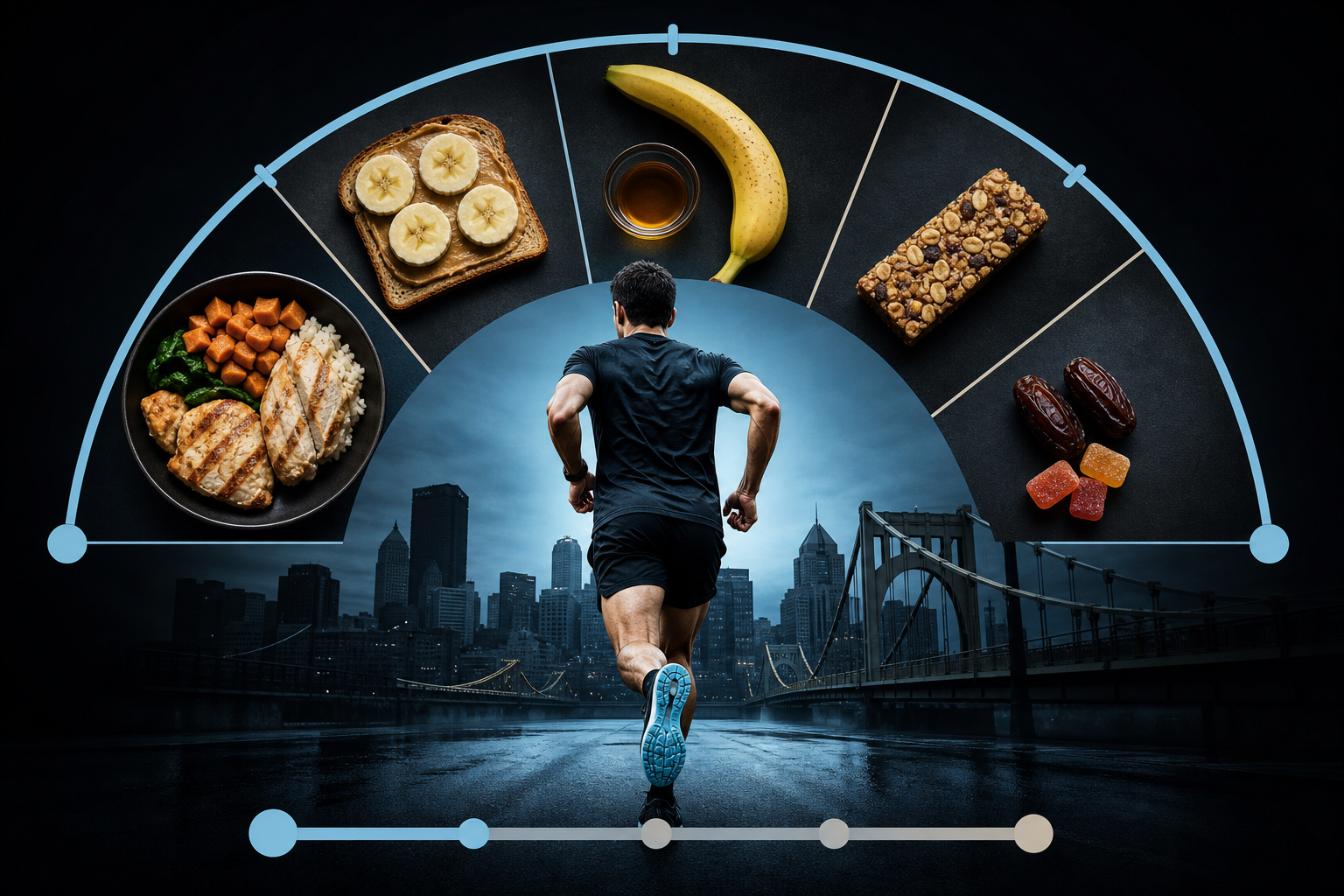
Get the timing off and a perfectly fine meal becomes a side stitch at mile two. Get the portions wrong and you're either dragging through the first half or making an unplanned stop before you've even warmed up. This guide covers both — plus the foods that actually hold up when you're moving.
The One Rule That Covers Most Situations
The further out you eat, the more you can eat. The closer to your run, the simpler and smaller it needs to be.
That's it. Everything else is a variation on that principle.
Two to three hours out? You can eat a full, balanced meal — carbs, protein, a little fat, vegetables. Your body has time to process it. Thirty to 45 minutes out? Keep it small and mostly carbohydrate-based. Less than 20 minutes? You're probably better off running on empty or grabbing a few quick bites.
Eating 2 to 3 Hours Before
This is the sweet spot for most people. A meal at this window gives you fuel without the discomfort of running on a full stomach.
What works here:
- Oatmeal with banana and a little honey
- Rice with chicken or eggs
- Toast with peanut butter and a piece of fruit
- A bowl of pasta or a grain bowl with lean protein
Keep fat and fiber moderate. Both slow digestion — useful at dinner, not when you're about to run. You don't need to eliminate them, just don't make them the centerpiece.
Portion-wise, think normal and comfortable. Not a feast, not a snack. Something you'd eat for lunch and feel good two hours later.
Eating 30 to 60 Minutes Before
You need something, but not much. The goal is a quick carbohydrate source your body can access fast without sitting heavy in your stomach.
What works:
- Half a banana
- A slice of toast with a thin layer of peanut butter
- A small handful of pretzels or crackers
- A date or two
- A small cup of applesauce
What doesn't: anything high in fat, high in fiber, or high in protein. Those macronutrients take longer to digest. A handful of almonds sounds reasonable until you're a mile in and your stomach disagrees.
Keep the portion small — 150 to 200 calories is usually enough. You're taking the edge off hunger, not fueling a marathon.
Running First Thing in the Morning
Early morning runs are their own category. If you're heading out within 20 to 30 minutes of waking up, you probably don't have time for a real meal — and your body may not want one.
For shorter runs under 45 minutes, most people do fine on empty. Your glycogen stores from the night before are usually sufficient.
For longer or harder efforts, a small, fast-digesting carb helps. A few bites of banana, a piece of toast, a gel — something that takes five minutes to eat and doesn't ask much of your stomach.
If you're showing up with the GRYT crew on Saturday mornings, the 7 AM start at the Montour/Peters Trail means you're either eating before 6:30 or skipping the pre-run meal entirely. Both are fine. What matters is that you ate well the night before and you're not showing up dehydrated.
Foods That Consistently Work
These aren't exotic. They're reliable.
- Bananas. Easy to digest, fast carbohydrates, a little potassium. The default pre-run food for a reason.
- Toast or white bread. Low fiber, quick energy. Not glamorous, but effective.
- Oatmeal. Works well at the two-to-three-hour window. Fills you up without sitting like a brick.
- Rice. Same idea as oatmeal — mild, digestible, solid carbohydrate source.
- Dates. Dense carbohydrates in a small package. Two or three before a run is a legitimate strategy.
- Sports drinks or diluted juice. If your stomach doesn't tolerate solids before running, liquid carbohydrates are a real option.
Foods That Tend to Cause Problems
- High-fat meals. Fat slows gastric emptying. A burger two hours before a run is a gamble.
- High-fiber foods. Beans, raw vegetables, bran cereals — all good for you, all bad timing before a run.
- Dairy (for some people). Not universal, but a meaningful number of runners find that milk, cheese, or yogurt before a run causes GI distress. If this is you, you already know.
- Spicy food. Fine in general, risky before movement.
- Caffeine on an empty stomach. Coffee before a run is common and often fine, but on a completely empty stomach it can cause nausea for some people. Pair it with something small if that's you.
Hydration Is Part of This
You can eat perfectly and still feel terrible if you're dehydrated. Water affects how your body processes food and how your muscles perform.
The simple version: drink water consistently throughout the day before a run. Don't try to catch up by chugging 16 ounces right before you head out — that just sloshes around.
If your urine is pale yellow before you start, you're in a good place. If it's dark, drink more water. Not a sports drink. Just water.
What to Do After the Run
Post-run nutrition matters too, especially if you're running consistently. Within 30 to 45 minutes of finishing, a combination of carbohydrates and protein helps your muscles recover and refuel.
It doesn't need to be complicated. Chocolate milk, eggs on toast, a smoothie with protein, rice and chicken — all of these work. The timing matters more than the specific food.
If you're logging your runs and want to track how nutrition affects your performance, creating a run recap after each session gives you something real to look back on.
The Bigger Picture
Pre-run nutrition is one variable. It matters, but it doesn't override sleep, training load, stress, or hydration. A perfectly timed banana won't save a run when you've slept four hours and skipped water all day.
Get the basics right consistently. Eat real food. Hydrate. Give yourself enough time between meals and effort. The details refine from there.
If you're newer to running or coming back after a break, the GRYT playbooks cover the practical side of building a consistent running habit — including what actually matters in the early weeks versus what you can figure out later.
FAQs
What should I eat before a morning run if I don't have much time?
A small, fast-digesting carbohydrate. Half a banana, a piece of toast, or a few dates all work. If your run is under 45 minutes, running on empty is fine too — as long as you ate well the night before.
How long before a run should I eat a full meal?
At least two hours. Two to three is the standard window where most people can run without GI issues.
Can I drink coffee before a run?
Yes, and many runners do. Caffeine can sharpen focus and improve performance. The main thing to watch is drinking it on a completely empty stomach, which causes nausea for some people. Pair it with something small if that's an issue.
What foods should I avoid before running?
High-fat foods, high-fiber foods, and anything spicy are the main ones to cut close to a run. They slow digestion or irritate the GI tract during movement. Dairy is worth testing individually — it bothers some runners and not others.
Is it okay to run on an empty stomach?
For shorter, easier efforts, yes. Your stored glycogen can carry you through 30 to 45 minutes without a problem. For longer or harder runs, eating something small beforehand helps.
What should I eat after a run to recover?
Carbohydrates and protein within 30 to 45 minutes of finishing. Chocolate milk, eggs on toast, a smoothie, or a grain bowl with protein all work. The timing matters more than the exact food.
Does what I eat the night before a morning run matter?
Yes, significantly. Your overnight glycogen stores come from what you ate the day before. A solid dinner with carbohydrates and protein sets you up better than trying to fuel entirely from a pre-run snack at 6 AM.
Consistency compounds. That includes how you fuel. Get the timing and portions right a few times and it stops being something you think about — it just becomes part of how you run.
Show up when you're ready to run with people who take the same approach to everything else.